
Case study
Zero to selling on day one, in four languages
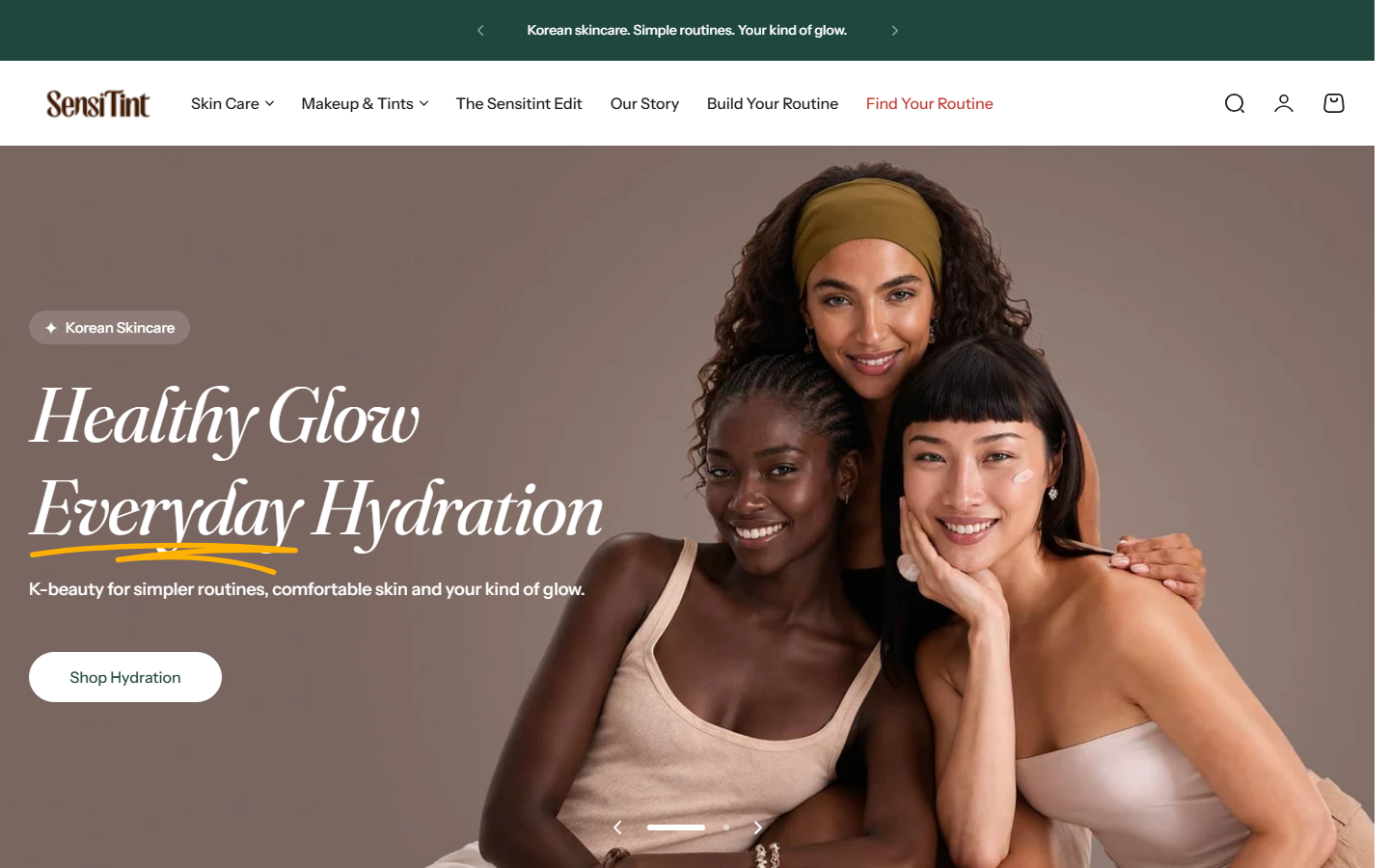
Sensitint is a Korean skincare and makeup brand built for sensitive skin: K-beauty cleansers, toners, serums, barrier creams, masks, lip care and tints from brands including AESTURA, Torriden, SKIN1004, mixsoon, Anua and Arencia. There was no store. eSolve launched sensitint.com from zero with a catalogue of more than 10,000 products, a gated reseller portal for wholesale buyers, storefronts in four languages, and an Amazon listing operation alongside it. The shop took orders on its first day.
The Challenge
There was no storefront, no catalogue structure, and no channel. Launching a K-beauty retailer means starting with a supplier catalogue in the tens of thousands of products, most of it arriving as raw brand data: Korean product names, inconsistent sizes, formats that do not agree with each other, and ingredient information a sensitive-skin buyer actually reads before deciding.
A catalogue that size breaks the usual approach to merchandising. Nobody browses ten thousand products. Without structure, a shopper who wants a ceramide cream for a compromised barrier lands in an undifferentiated grid, and the brand looks like a dropshipper rather than a considered retailer.
Two audiences wanted different things from the same inventory. Retail shoppers needed guidance, ingredient clarity and a routine they could follow. Resellers needed wholesale access, their own pricing, and the ability to order at volume without negotiating through a contact form. Serving both from one public storefront would have compromised each.
The brand was never going to be single-market. Launching into one language and retrofitting the rest later means rebuilding navigation, checkout and merchandising a second time, so international had to be part of the build rather than a phase two.
The Solution
We built the store, the catalogue structure and the channels as one launch: a Shopify storefront that makes a very large catalogue navigable, a gated portal so wholesale runs separately from retail, four language storefronts from day one, and Amazon as a parallel channel rather than an afterthought.
A catalogue built to be narrowed, not scrolled
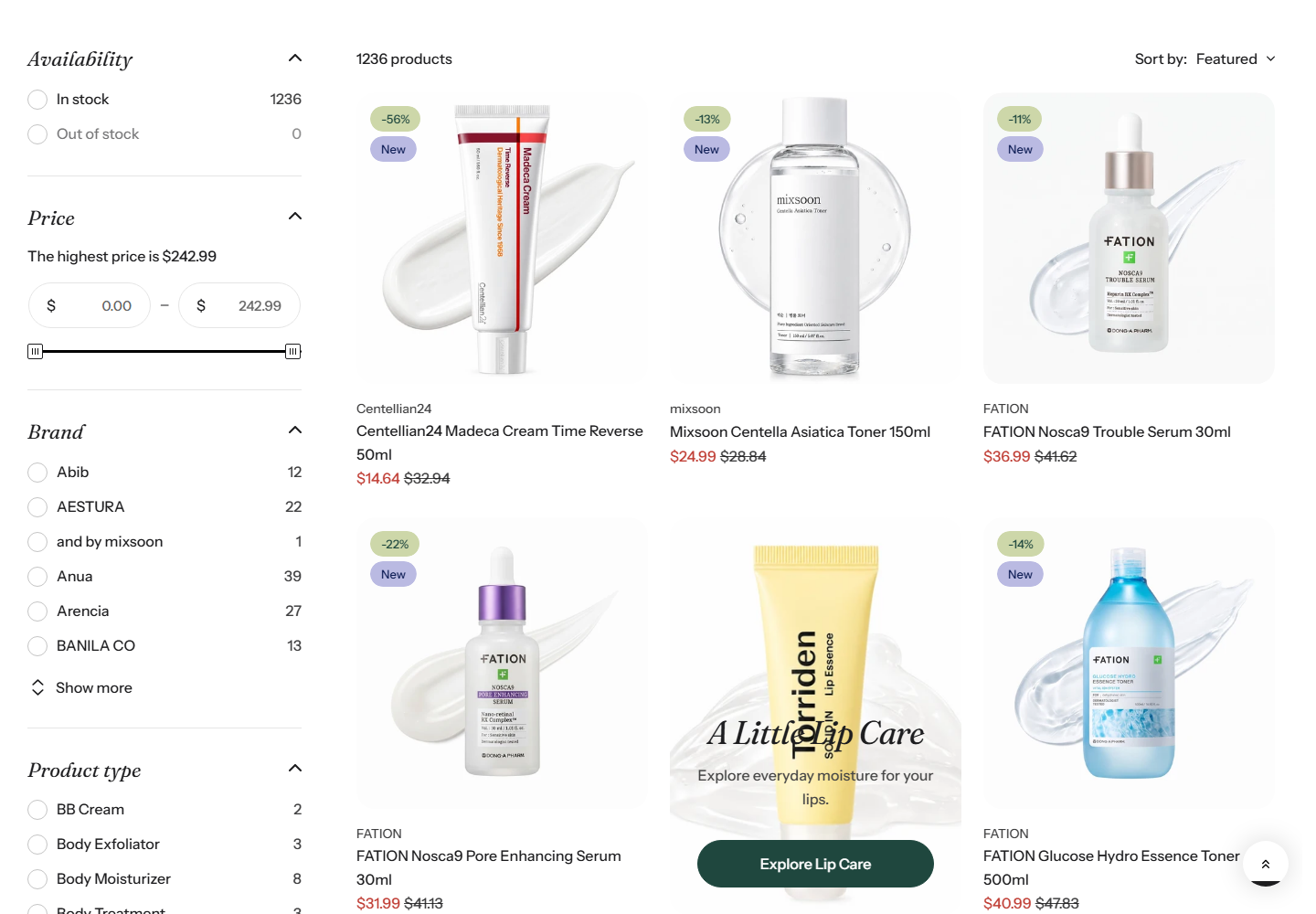
Products are filterable by brand, product type, price and availability, with live counts on every facet, so a shopper moves from ten thousand options to a handful in two clicks. Categories follow how K-beauty is actually bought, by step and by concern: cleansers, toners, serums, barrier creams, masks and patches, eye care, lip care, makeup and tints. The structure carries the catalogue rather than the shopper carrying it.
Guided selling for people who do not know the step order
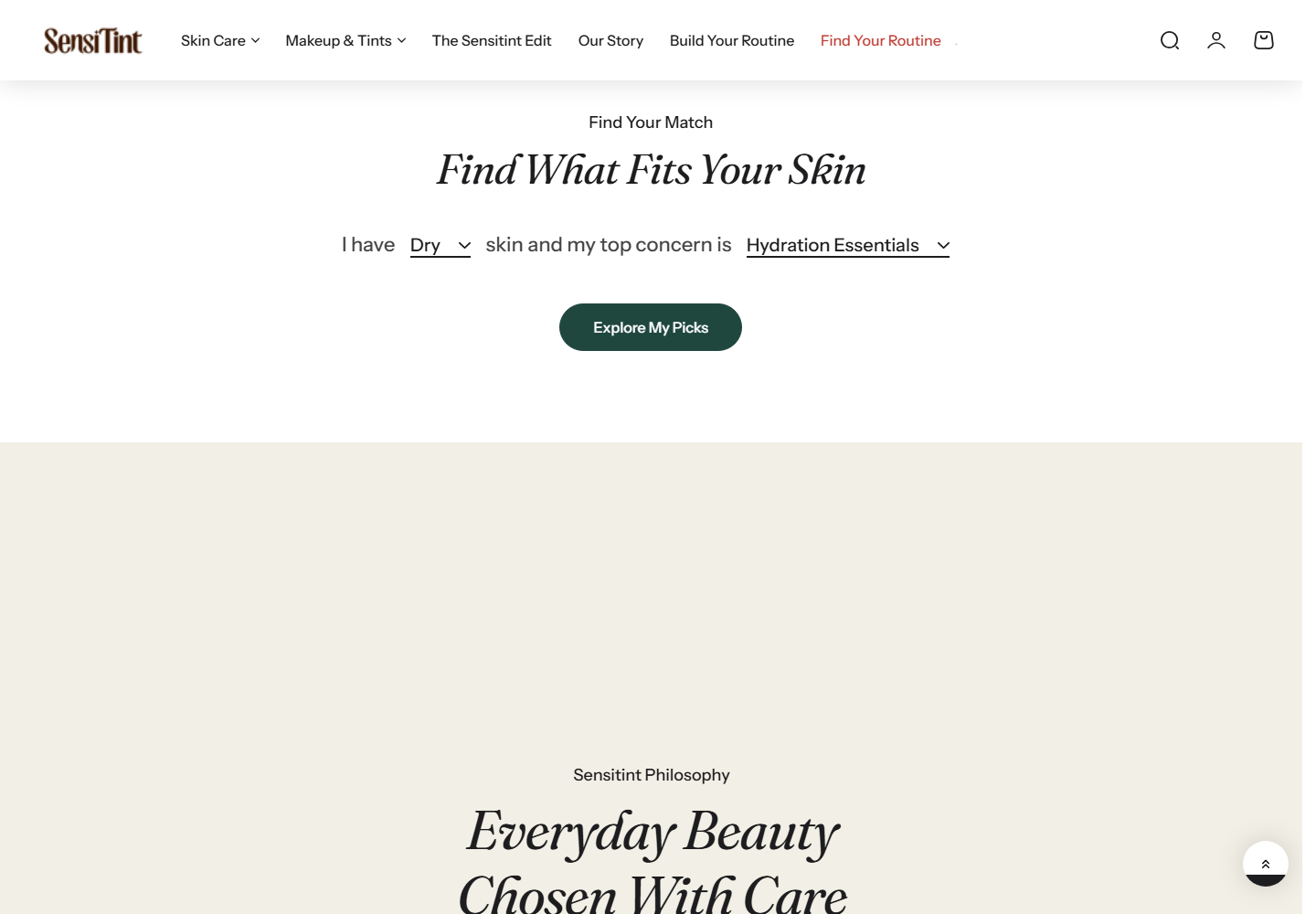
Korean routines are the reason the category converts and the reason it intimidates. The storefront answers that directly: a routine builder that lays out cleanse, tone, hydrate and moisturise with optional layers marked optional, a fit finder that takes skin type and primary concern and returns a short list, and texture entry points for people who know they want light layers or richer moisture and nothing more specific than that.
Ingredient clarity as a merchandising decision
For sensitive skin, the ingredient list is the product. Formula detail, size and current packaging sit on the product page where the decision happens rather than behind a support article, so a shopper avoiding a specific actives can check before adding to cart. That is a conversion feature in this category, not a compliance checkbox.
Wholesale behind a door, retail in front of it
Resellers get their own gated portal with wholesale access and pricing, kept off the public storefront entirely. Retail shoppers never see trade pricing, and buyers never have to shop a consumer catalogue to place a trade order. One inventory pool, two front doors, no compromise in either direction.
Four languages from the first day
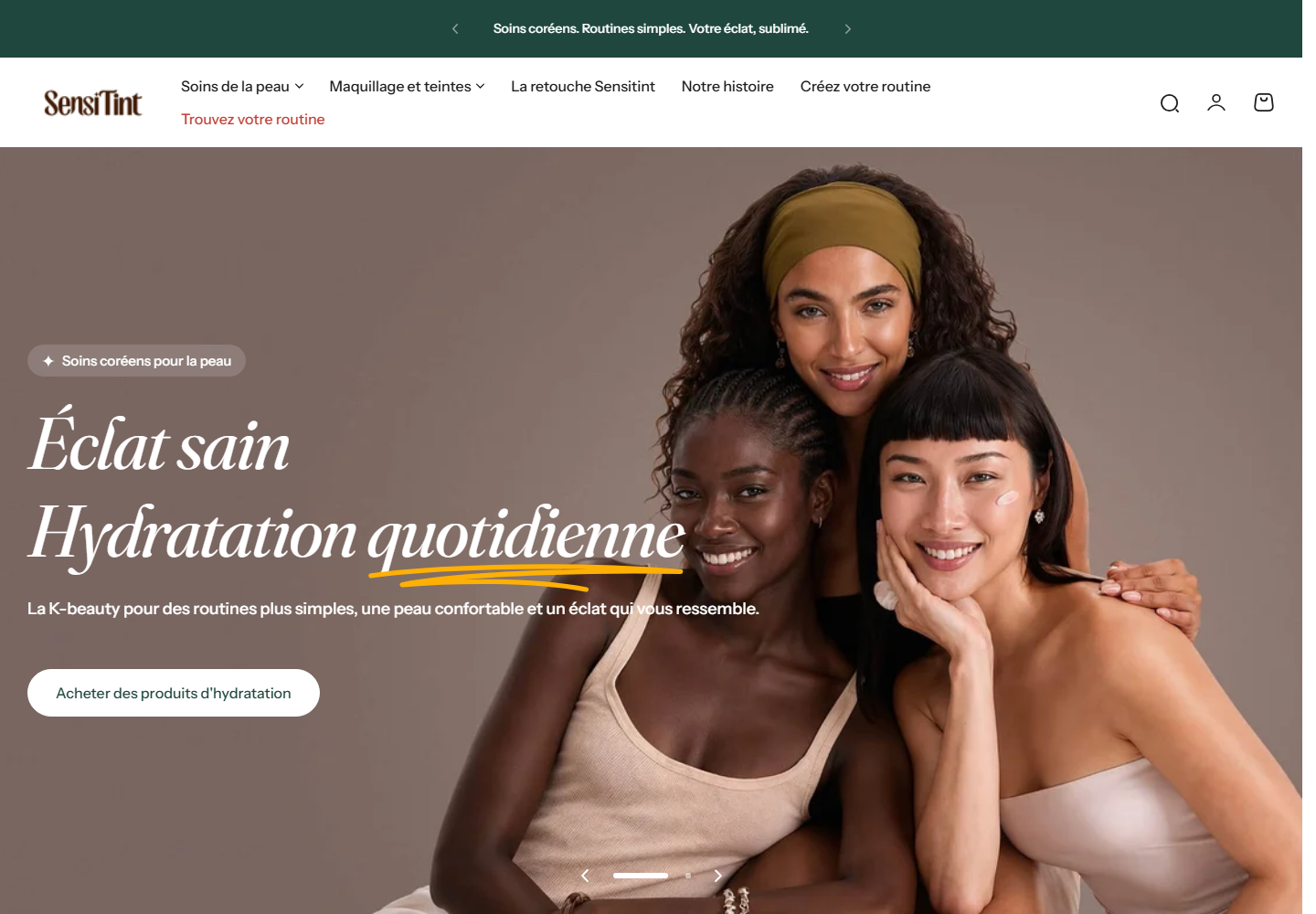
The storefront ships in English, Arabic, French and Italian, with localisation wired into navigation, product data and checkout rather than bolted on afterwards. Arabic in particular is not a translation layer on a Latin-script design; it is a different reading direction that has to be right at build time.
Amazon as a second channel, not a second job
We listed the products on Amazon alongside the storefront, so the brand reaches buyers who begin and end their search on a marketplace without splitting the operation into two disconnected businesses.
The Results
Sensitint went from no storefront to a live K-beauty retailer with a catalogue of more than 10,000 products, a gated reseller portal for B2B, four language storefronts and an Amazon channel. It made sales on its first day, which is the only launch metric that tells you the catalogue, the merchandising and the checkout all work at once.

Sensitint
Category
- Shopify storefront build
- Catalogue architecture at scale
- B2B reseller portal
- International storefronts
- Amazon channel
- Merchandising and guided selling
Tools


More projects
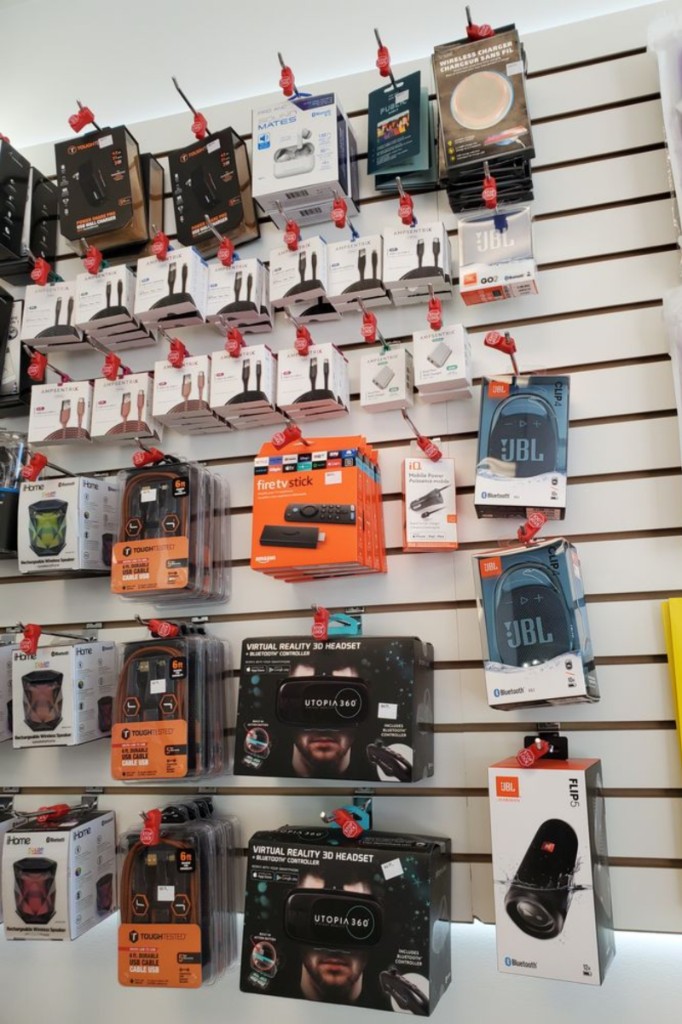

SmartFix Tech
Bookings and gift cards treated as ecommerce for a games café and escape rooms
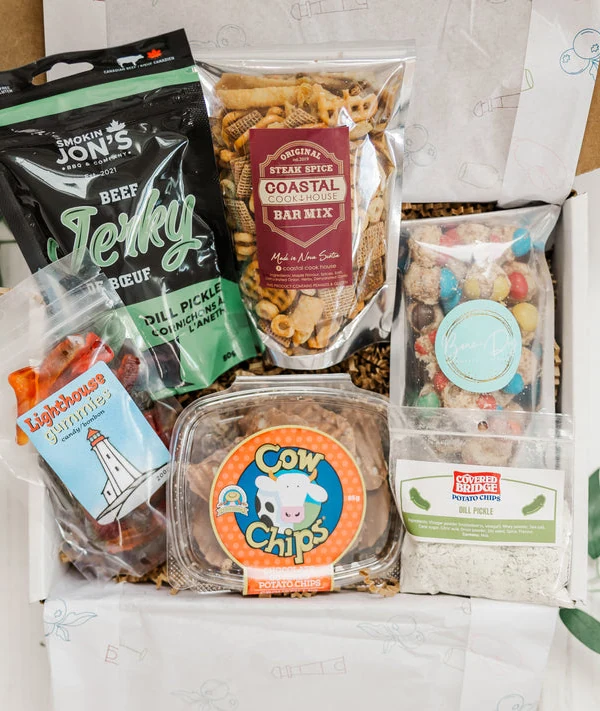

The Maritime Box
A gift box storefront that lets senders write a note and add a photo, without Shopify Plus

The Atlantic Canada Box
Found without spending a dollar on ads: SEO, AI citations, and free shopping listings