
Agentic commerce
The next customer at your checkout is an agent.
AI agents are starting to browse, compare, and buy on their owners’ behalf. Agentic commerce is the work of making your Shopify store reachable to them: every capability an agent needs, exposed as data it can read and act on.

One team, every endpoint



Your brand has entered the chat
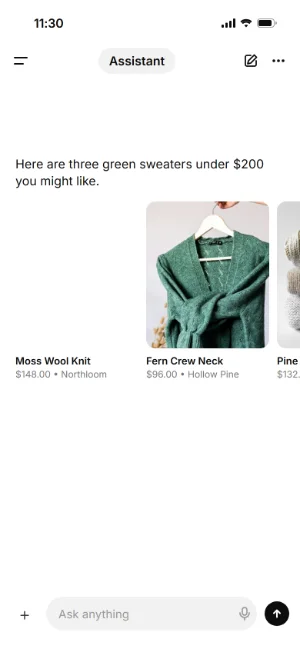
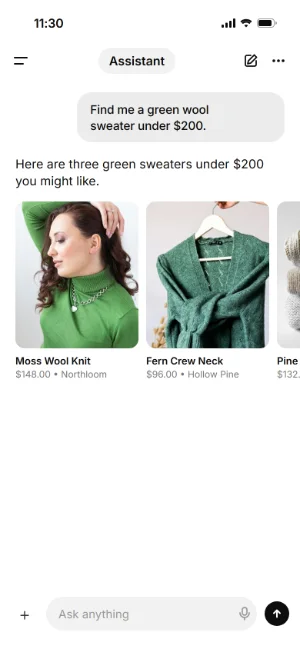
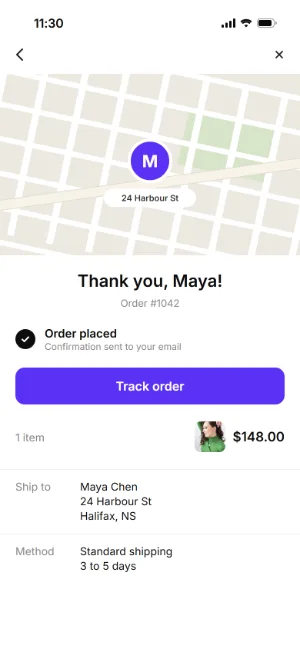
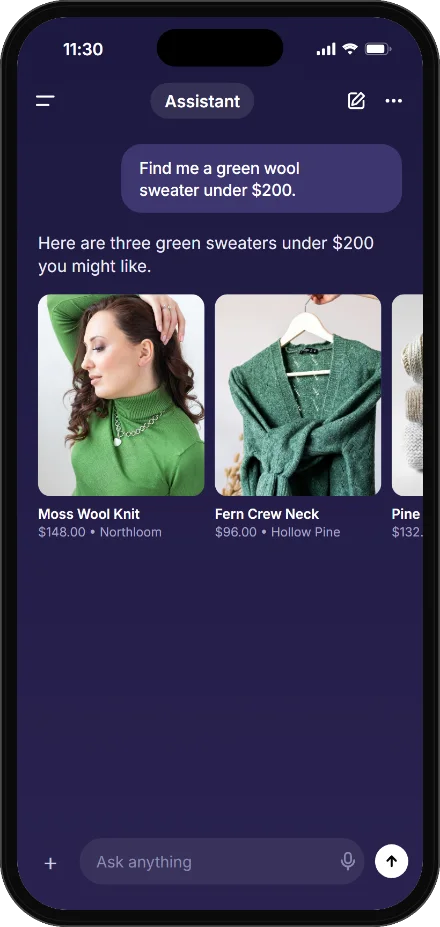
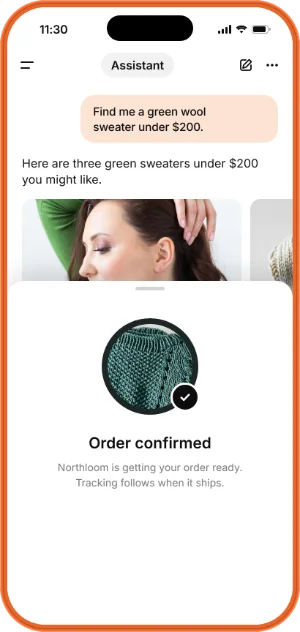
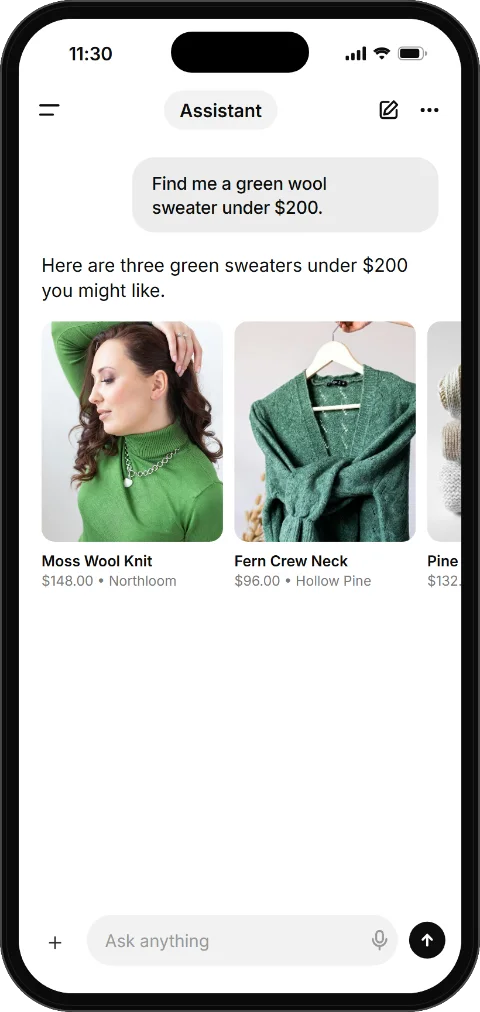
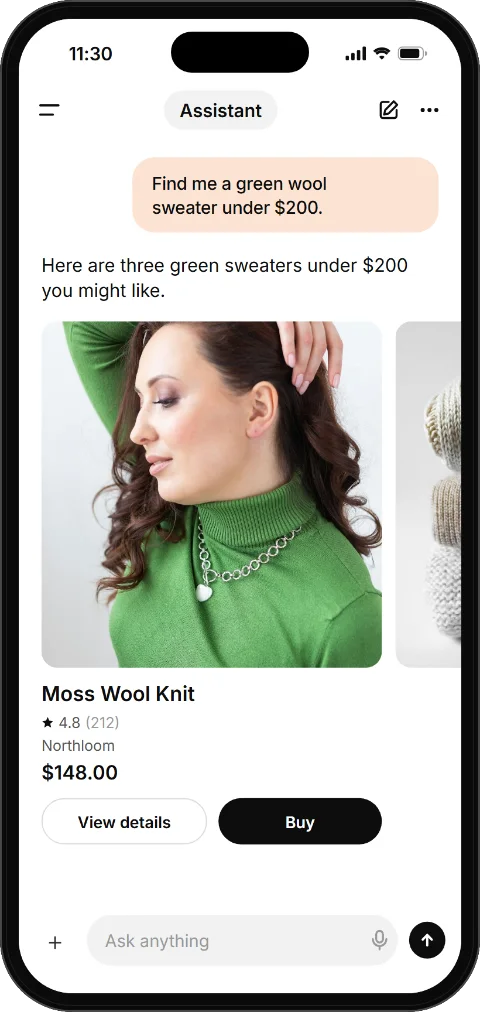
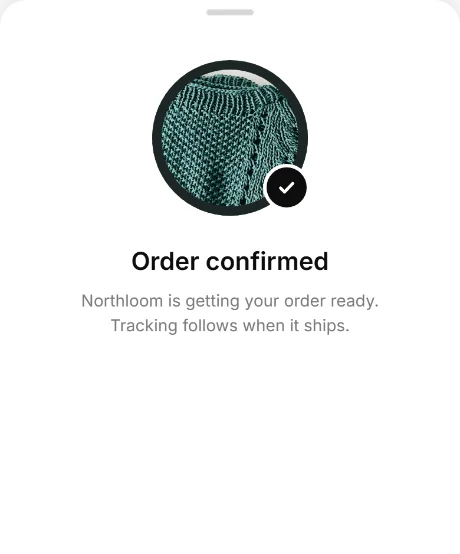
Get discovered across AI channels. Shoppers check out right in the chat. You don't lift a finger. All powered by Agentic commerce.






























What agentic commerce is
What is agentic commerce?
Agentic commerce is online buying carried out by AI agents acting for a person: the agent discovers products, compares them, and completes the transaction, instead of the person clicking through a storefront themselves. The buyer sets the intent and the budget; the agent does the shopping.
It matters because it changes what wins. A storefront persuades a human with design, photography, and copy. An agent never sees any of that. It sees your product data, your prices, your availability, and your checkout, and it acts on whichever store exposes them most reliably. The brands preparing now are not betting on a trend; they are cleaning up the same catalog data that already drives search, feeds, and marketplaces.
Discovery to transaction
How an AI shopping agent buys
Your store needs to support three stages: discovery, comparison, and purchase.
The agent finds candidates
A buyer describes what they need. The agent checks catalogs, specs, availability, and reviews to find suitable products.
The agent compares on facts
The agent compares price, dimensions, compatibility, lead times, and return terms. Clear, checkable details help it compare your products.
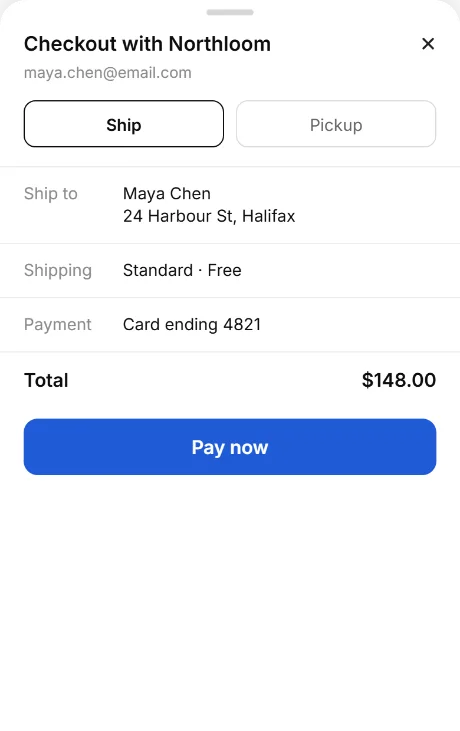
The agent completes the purchase
Emerging standards such as the Agentic Commerce Protocol and agentic payments let an agent build a cart and pay on the buyer’s behalf. Stores with clean checkout and current data are the ones this works on.
The readiness work
Make your store data readable by AI
Protocols such as the Universal Commerce Protocol and the Agentic Commerce Protocol need clear store data. Start with consistent product details, prices, and inventory that systems can read.
Today: scattered product details
Agent readable layer
One catalog. Priced, current, extractable.
After: an agent can help shoppers
- discover
- cart
- pay
- confirm
Agentic payments
Preparing for AI payments
Payments are where agentic commerce gets real: standards from the major payment networks and platforms are emerging to let an agent pay with mandated limits and full auditability. Our position is deliberately boring. We keep your checkout native and standards-adjacent rather than bolting on a proprietary agent checkout, so when your platform switches these rails on, your store qualifies on day one instead of queuing for a rebuild.
questions
Straight answers about agentic commerce
Is this just SEO with a new name?
SEO and agentic commerce share structured data and readable content. SEO aims to bring clicks from search results. Agentic commerce helps assistants read, quote and recommend products accurately, sometimes without a click. It puts more emphasis on complete, accurate data in formats software can read.
Can you guarantee ChatGPT will recommend us?
No. We cannot control ChatGPT recommendations, prompt wording or changes to its behavior. We can fix missing structured data, incorrect prices, incomplete attributes and unreadable specifications so your products are easier to understand accurately. That does not guarantee a recommendation.
How do we measure whether this worked?
We repeat key buying questions to record how assistant answers change, track referral visits where analytics identifies them, and check structured-data validity and feed completeness. Assistant answers are qualitative evidence, not a stable ranking metric.
Is it too early to invest in this?
It depends on your category and margins. Assistant traffic is still small for most brands but growing. Accurate structured data, feeds and specifications also help conventional search, marketplaces and feed approvals. If your catalog data is already strong, waiting can be reasonable. Otherwise, the cleanup has wider benefits.
What actually stops an assistant reading our catalog today?
Common problems are specifications in images, missing or invalid Product and Offer structured data, incomplete identifiers such as GTIN or MPN, and outdated prices in cached content. We audit these and rank them by their effect on your business.
Do we need a PIM system for this?
Usually not at first. For catalogs under a few thousand SKUs, Shopify metafields and careful data entry are often enough. A PIM becomes more useful across channels with different data requirements, multiple languages or ERP data that needs enriching before publication. We assess whether the extra system is justified.
Find out if an agent could buy from you today.
We check your catalog, structured data, feeds, and checkout, then send a written list of priorities.