
AI search optimization
Help shoppers find your products in AI search.
Make your products easier to find, understand and choose when customers shop with AI.
Illustrative answers · not measured results
“which brand should I buy for [your category]?”
Cited sources
- marketplace-listing.comthird-party reseller
- roundup-blog.net“best of” affiliate post
- forum-thread.comfour-year-old thread
An answer may draw on retailers, articles and discussions. Check which sources appear for the questions your buyers ask.
Cited sources
- your-store.com/collectionsstructured collection pageyou
- your-store.com/productsproduct data with specsyou
- roundup-blog.net“best of” affiliate post
Your pages may appear when they offer useful, accessible information. This is an example of a citation, not a promised result.



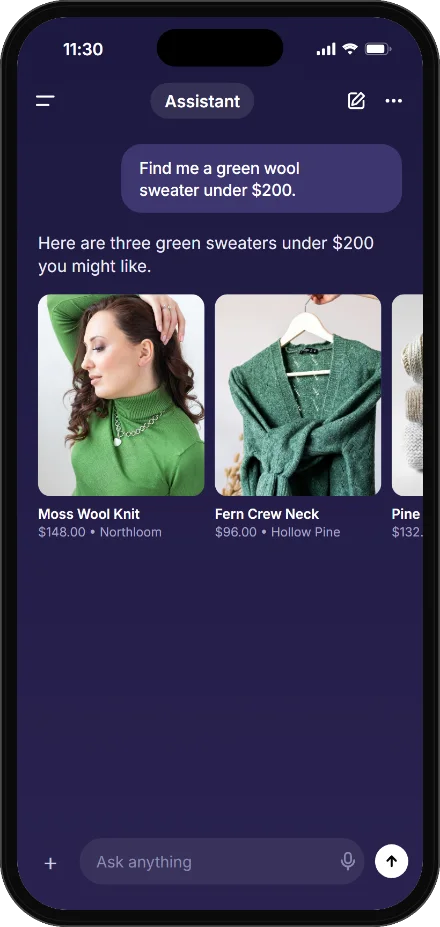
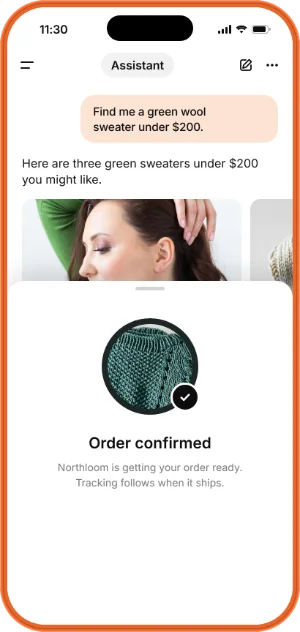
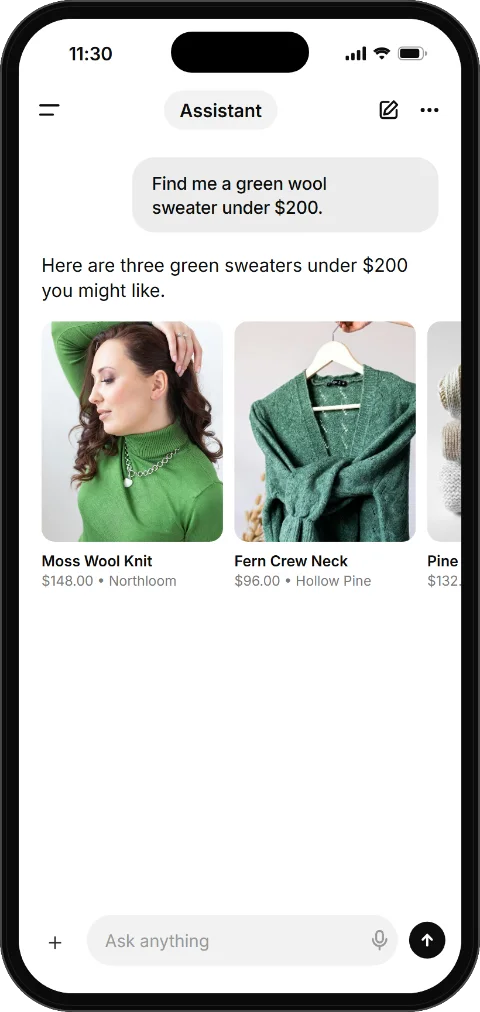
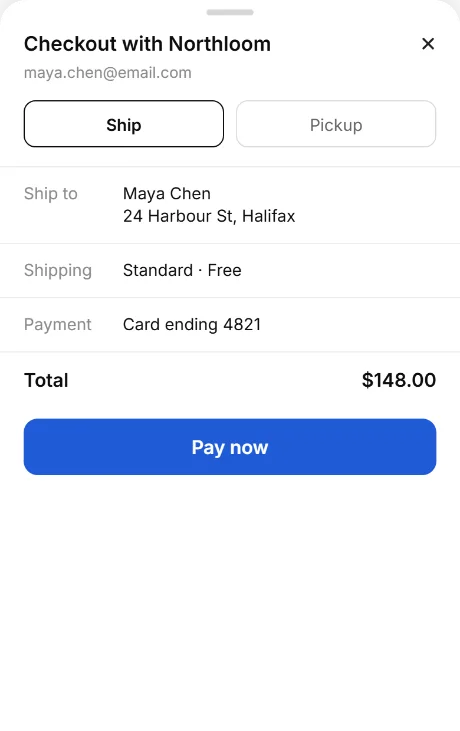
Your brand has entered the chat
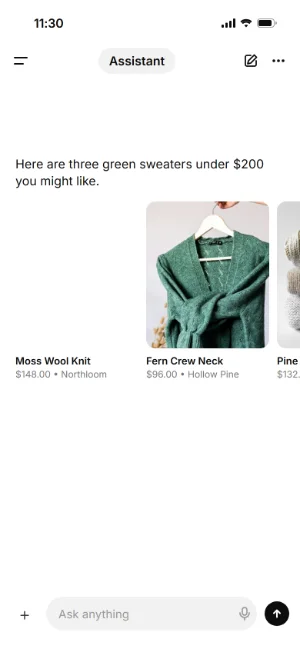
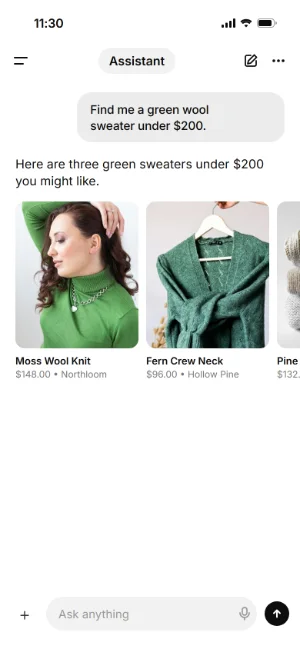
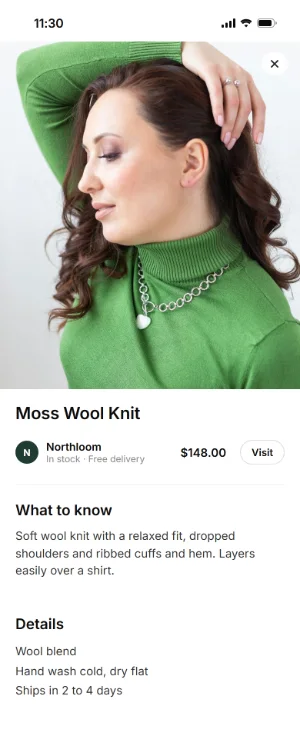
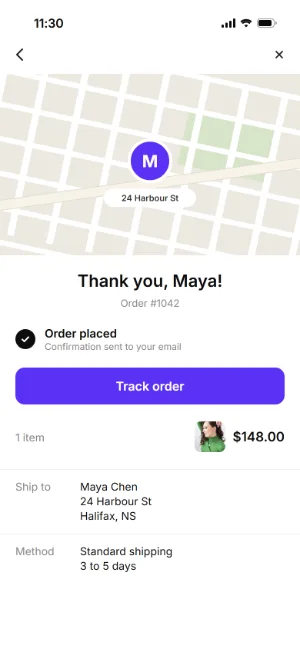
Get discovered across AI channels. Shoppers check out right in the chat. You don't lift a finger. All powered by Agentic commerce.
























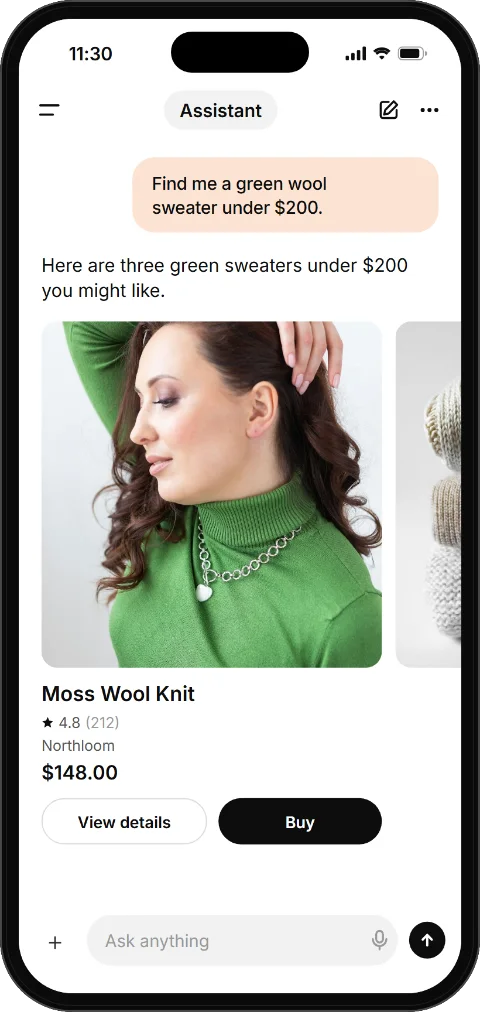
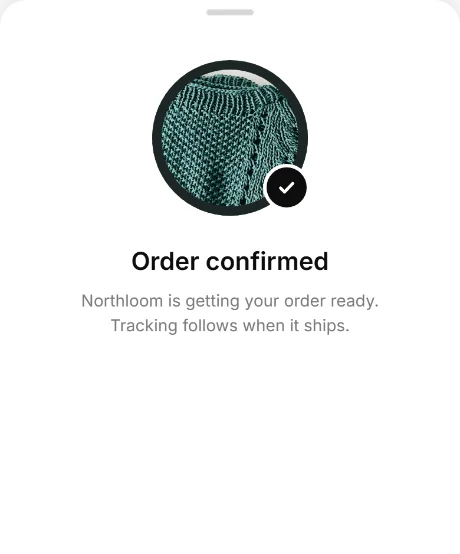





How shoppers find you
Be easier to discover and choose
Clear product information helps shoppers from their first search to their final choice.
Get discovered
Reach new shoppers
- for your customers
- Be easier to find when buying starts.
- how we help
- Useful product pages that search can reach.
Be understood
Make your value clear
- for your customers
- Show who your products are right for.
- how we help
- Clear details and helpful comparisons.
Help buyers choose
Turn interest into confidence
- for your customers
- Give shoppers answers that move them forward.
- how we help
- Practical buying advice on your pages.
Clearer products
Give shoppers a reason to choose you
Answer the questions that stand between interest and an order.
Make choosing easier
Give shoppers the product details they need to buy confidently.
Answer what matters
Help customers see whether your product is right for them.
Remove conflicting information
Keep prices and product details consistent wherever shoppers find you.
Product information in practice
Make the product facts easy to check
Clear product facts help shoppers compare options and give search systems useful information. This is an illustrative example.
Illustrative product data
example values
"roast_level": {
"value": "medium-dark",
"confidence": 0.96
"evidence": "product page, stated"
}
"origin": {
"value": "single-origin, Colombia",
"confidence": 0.93
"evidence": "product page, stated"
}
"taste_notes": {
"value": ["chocolate", "citrus"],
"confidence": 0.84
"evidence": "roaster notes + reviews"
}

single_origin_roast_340g
in_stock · ships_weekly
"grind_options": {
"value": ["whole bean", "espresso", "filter"],
"confidence": 0.91
"evidence": "variant data"
}
"subscription": {
"value": "every 2 to 6 weeks",
"confidence": 0.88
"evidence": "selling plan data"
}
"ships_from": {
"value": "roasted to order, Canada",
"confidence": 0.79
"evidence": "shipping policy"
}
Example product facts and confidence values for illustration. These are not measured scores or verified claims about the pictured product.
A useful first step
Try these checks on one product
Pick one product and use these checks to find one useful improvement.
Check the facts buyers need
Can a shopper find size, fit and delivery details without asking your team?
Answer one buying question
Add a clear answer to a question customers ask before buying.
Compare your product and feed details
Check that price and availability agree on your product page and shopping feed.
For the full guide and sources, read: How to show up in AI search. For the brand-level view, measuring what assistants say about you rather than about your products, see how to improve brand visibility in AI answer engines.
deliverables
What you gain
Know where you stand
See how your brand appears when AI answers your buyers’ questions.
Make your products understood
Give search systems accurate details about what you sell.
Help shoppers decide
Turn common buying questions into useful answers on your pages.
Tell a consistent story
Help shoppers recognise the same brand across your store and listings.
See what improves
Track mentions alongside identifiable visits and orders to understand their value.
Related product-data work
Product data and feeds for a pet nutrition brand
Corey Nutrition / Inukshuk’s Shopify work brings catalogue facts, shopping feeds and search content together alongside its wholesale help desk. Explore the product information and discovery work behind the implementation.
- product facts reconciled
- Dataproduct facts reconciled
- shopping channels connected
- Feedsshopping channels connected
- product and search content
- Pagesproduct and search content
- shared wholesale help desk
- Inboxshared wholesale help desk
questions
Straight answers about AI search
What is answer engine optimization?
AEO helps search tools find useful answers in your content. For a store, that starts with clear product facts and buying advice. It overlaps with SEO and cannot guarantee a recommendation.
What is generative engine optimization, and is it different from AEO?
GEO describes work to improve visibility in AI-generated answers. The terms overlap. We focus on your buyers’ questions, useful product information and how your brand appears.
Do we still need SEO if we do this?
Yes. Google’s existing SEO guidance applies to its AI features; no special AI markup is required. We consider your current traffic and sales before recommending extra work.
How do you measure AI visibility?
We repeat agreed buyer questions and record the answers and sources. This measures a sample of visibility. Identifiable visits and orders are tracked separately, because a mention alone is not a sale.
How long before an assistant starts citing us?
There is no reliable deadline. Answers vary by tool and search. We report what changed on your store and what we observe over time, without promising a citation.
Find out what the assistants say about you today.
See where your brand stands and where clearer product information could help shoppers discover you.