
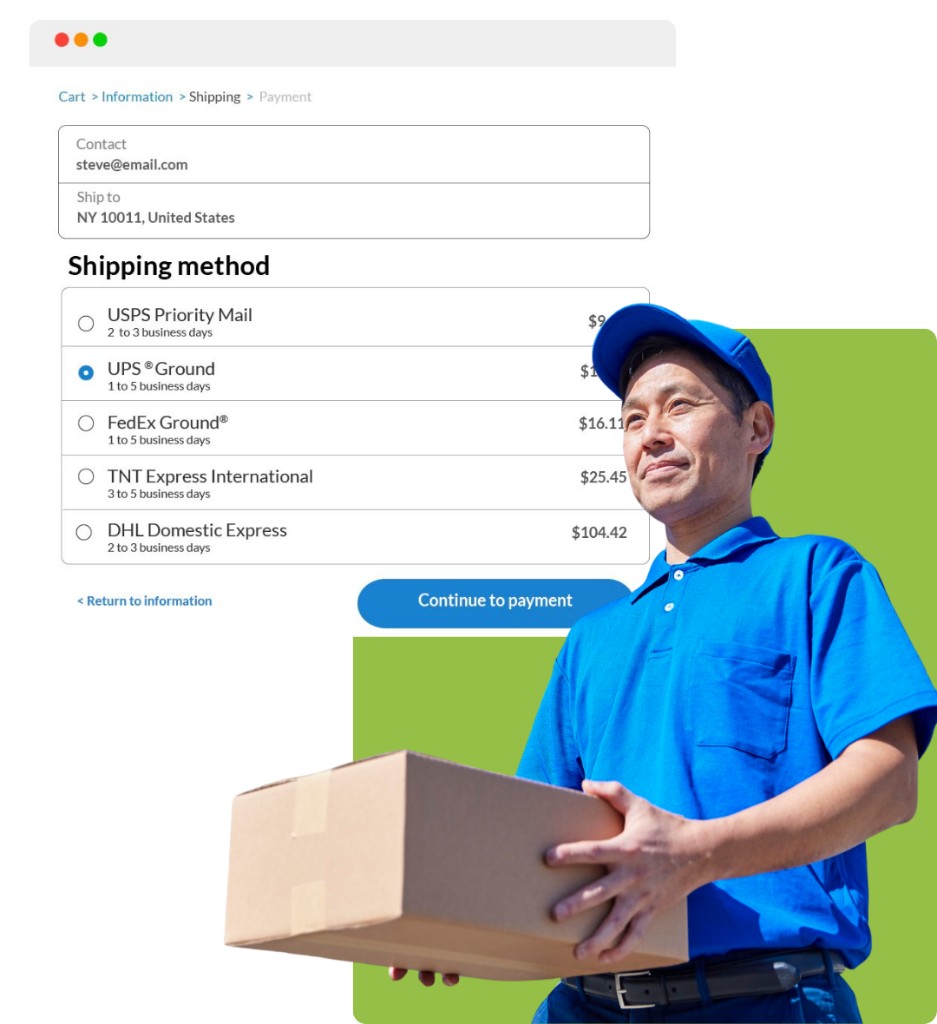
Let buyers see freight costs before they order.
Let customers order without chasing a freight quote, and give your team fewer shipments to enter by hand.
- Buyers can see delivery costs
- Pallet orders without the quote chase
- Choose the right delivery option
- Less paperwork to retype
Built around your business
Shipping should not slow the sale.
- 01
“We guess the shipping and lose the margin.”
Give customers a quote based on the order and destination.
- 02
“We enter every shipment all over again.”
Let order details travel with the shipment.
- 03
“Customers keep asking where the order is.”
Make available tracking easy for customers and support to find.
Less quoting. Less retyping. Fewer interruptions.
Keep orders moving from checkout to delivery.
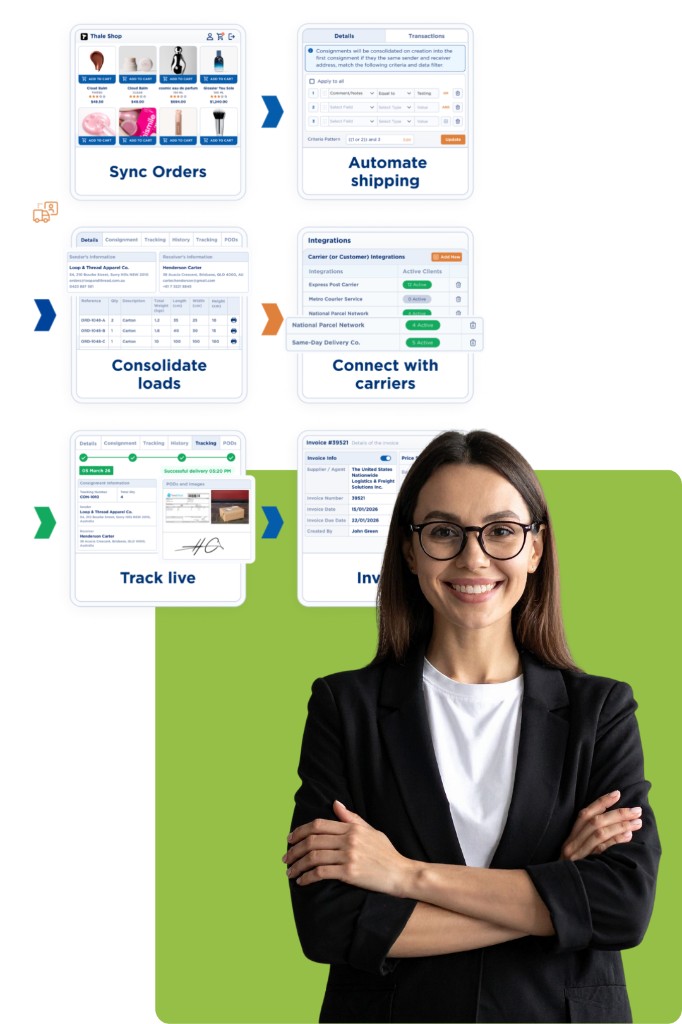
Automate the steps from order to delivery
Four shipping tasks your team can stop doing by hand.

Calculate your freight class
Estimate freight class from shipment size and weight, then confirm it with your carrier.
Carriers we connect with
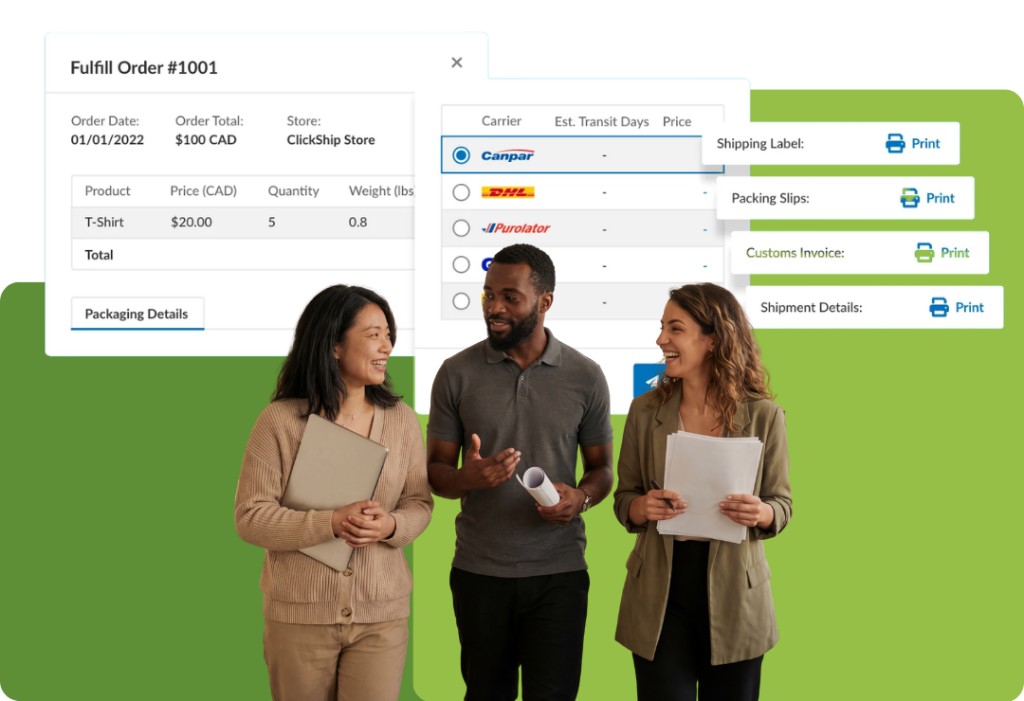
Connect national and regional parcel and LTL carriers, including freight lines that standard shipping apps do not support.


Carrier names and logos are the property of their respective owners, shown to identify the services we connect.
The wholesale case
Freight belongs in your wholesale checkout
A wholesale portal needs freight quotes for pallet orders. We build the portal and shipping connections together so buyers can order without switching to email.
See the B2B wholesale serviceWe work with the tools your team already uses. And when you adopt something new, we manage the change.
Including Gmail, Shopify, Mailchimp, Zapier, Google Ads, Slack, HubSpot, Klaviyo.
See all integrations







Connected wholesale and fulfillment work


Shipping and Freight Automation FAQs
What does Shopify shipping automation actually cover?
It covers live rates at checkout, carrier booking from order data, labels and customs paperwork, and automatic tracking updates for customers and support. Small-parcel stores may only need live rates. Pallet shippers usually need all four.
Can Shopify really quote LTL freight at checkout?
Yes, when product data includes dimensions, freight class and any extra service requirements. We connect that information to the carrier’s rates so customers can price pallet orders at checkout. The work includes catalog preparation as well as the carrier connection.
What if a shipment cannot be priced automatically?
Agree a clear fallback before launch: a quote request, manual review or another tested delivery option. We check unusual product combinations, remote destinations and extra delivery services as part of the scope. An incomplete quote should not quietly become an underpriced shipment.
Do we have to change carriers to work with you?
No. We aim to use your existing carrier accounts and negotiated rates. We only recommend adding a carrier when your current options do not serve a route well.
What about cross-border shipments between Canada and the US?
Cross-border is where the paperwork stops being a formality. Commercial invoices, country of origin, tariff classification, and the accessorials that apply at the border all need to be right before the shipment moves, or freight sits at the line while somebody sorts it out. We handle those as part of the shipment rather than as a document someone fills in afterward.
Can our team update rates and keep using our existing systems?
We decide where rates, packaging rules and fulfillment records should be managed, then connect those systems to Shopify. Your team gets instructions for the updates it can make. If a carrier or rule needs custom maintenance, we make that clear in the scope.
Stop quoting freight by email.
Tell us what slows your shipments down, and we’ll help you find a simpler way.