
Fewer repeat replies. A person when it matters.
We teach the agent from how your team already writes and the way your brand talks to customers. Then it answers from live order data, with a clear path to a person when judgment is needed.
- Taught from your communication
- Answers outside office hours
- Less time writing replies
- Answers customers can trust
Built around your business
Customers want an answer, not another wait.
- 01
“The bot cannot answer about my order.”
Customers need their delivery details, not another help article.
- 02
“One wrong answer lost the customer’s trust.”
Keep replies tied to current order information and approved policies.
- 03
“Customers get stuck in the bot.”
Make it easy to reach a person without starting over.
Give your team breathing room.
Across our client work, 65% of support is handled without a human.
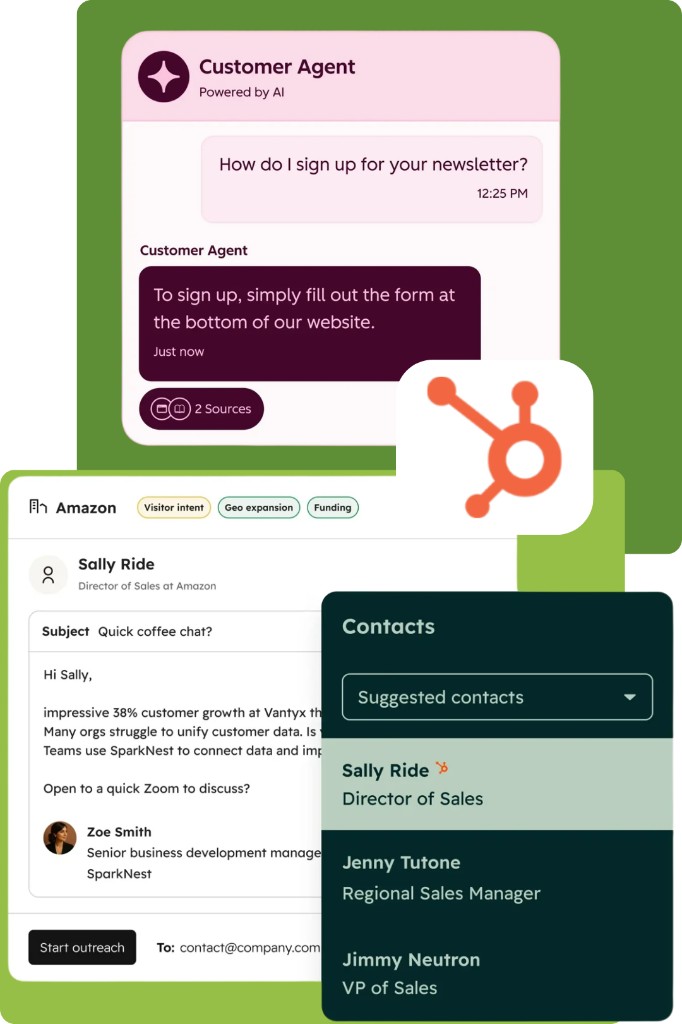
We work with the tools your team already uses. And when you adopt something new, we manage the change.
Including Gmail, Shopify, Mailchimp, Zapier, Google Ads, Slack, HubSpot, Klaviyo.
See all integrations









E-Commerce AI Agents for Customer Service FAQs
What is an e-commerce AI agent?
It is software that uses order, shipment, product and customer data to handle questions. Unlike a scripted chatbot, it looks up the customer’s records, answers from them or proposes an action for a person to approve. Questions it cannot support with data go to a person.
How is an AI agent different from a chatbot?
A scripted chatbot may link to a tracking page. An agent can read the fulfillment record and answer with the carrier and delivery day. If an exchange is needed, it can propose one for a person to approve. That lets it resolve some questions within the conversation.
What does the agent train on?
We teach it from how your team already communicates: past replies, website and help content, plus your brand voice. Live order and shipping data keep answers factual. That mix is how the agent stays on-brand without inventing details your desk would never say.
What happens when it does not know the answer?
We configure the agent to hand over when information is missing or a decision needs a person. Your team receives the conversation and available order details. We test those handoffs before launch and review real answers afterward, because AI can still make mistakes.
Does this need HubSpot, or does it work with our current desk?
Our agents use HubSpot Breeze with Shopify. We first check whether better help content or a connection could solve the problem in your current desk, then confirm software and usage costs before recommending a move.
How do we measure whether it is working?
We record three measures before launch and track them afterward: resolution time, the share of conversations resolved without a person and reopened tickets. Across our client work, 65% of support is handled without a human. Your desk’s results are measured against its own starting point.
Take repeat questions off your plate.
Tell us what fills your inbox, and we’ll help you find a useful first step.